


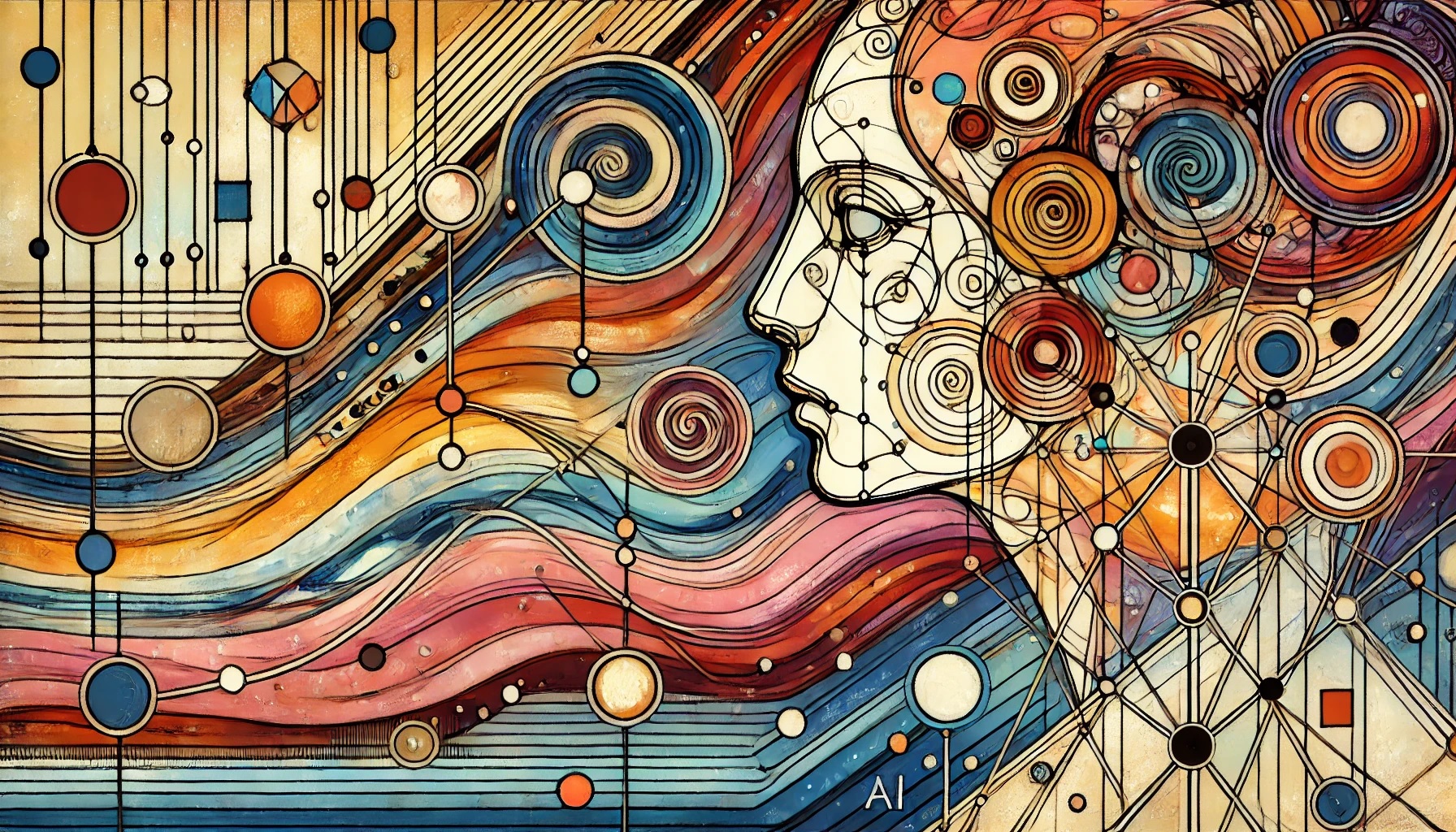

Artificial Intelligence represents a significant anthropological challenge because it inevitably affects the lives of individuals and the entire human race. It is radically changing information and communication, introducing remarkable social, cultural and behavioural changes. The fact that machines are able to carry out activities once reserved for humans is having a profound impact on people’s lives. All this raises questions that transcend the purely technical-scientific realm. These questions arae mainly about the meaning and purpose of human life, the space for freedom and a sense of responsibility, the fundamental process of knowledge acquisition, the certainty of truth.
The promises and risks of artificial intelligence
Considerable advances in new information technologies, particularly in the digital sphere, bring exciting benefits and promises and inevitable risks. Artificial intelligence systems can store a vast amount of data and make correlations between them, facilitating information exchange between different peoples and generations. At the same time, they can be tools of “information pollution”, altering reality through false narratives presented as if they were true. Consider thefake news of today, which makes use of deep fake technology, i.e. the creation and dissemination of photos, videos and audio generated by artificial intelligence software that seem perfectly plausible but are actually fake. Famous people have featured in some of these videos or audio messages and they appear to say words they had never actually said or do things they never did. These gratuitous attacks on people’s dignity debase our civilisation and humanity and inevitably generate conflict.

Any tool placed in people’s hands can be used for good or evil. Much depends on the intentions in their hearts, on their inner lives, whether their lives are full of love. No technological innovation is neutral, it all depends on the positive or negative use that is made of it. Artificial intelligence programs ‘must have an ethical “inspiration”. Moreover, an ethical decision is one that takes into account not only an action’s outcomes but also the values at stake and the duties that derive from those values.’[1]. Therefore, in order to safeguard the integral wellbeing of individuals, the common good and the future of humanity, it is necessary to ethically regulate the development and use of artificial intelligence in its various forms and counter any negative outcomes that produce discrimination, violence and social injustice.
Authentic technological development must aim to improve people’s integral wellbeing and quality of life. It must never damage their personal dignity and inner lives. Such developments must always be accompanied by adequate training of personnel on the topic of responsibility.
The case for responsible freedom
People are creatures of freedom and responsibility, they feel free and responsible in the depths of their souls[2]. Freedom and responsibility come from moral experience and it makes a person a moral subject. Freedom and responsibility co-exist and can never be separated. The two terms constitute a dialectical polarity, and anyone who does not have it is outside the moral realm. Freedom must be experienced responsibly, it must never be disassociated from responsibility. “Freedom, however, is not the last word…In fact, freedom is in danger of degenerating into mere arbitrariness unless it is lived in terms of responsibleness.”[3].
Freedom does not mean doing what one wants to do. Freedom is a radical inclination towards the truth, the good and the highest and most sublime values. As such, it can never be separated from the responsibility involved in evaluating (weigh up the pros and cons of) the benefits that appear on the horizon of our awareness and the need to account (be accountable ) to someone for one’s own actions.
People are always responsible for what they do and they bear the personal and transpersonal consequences of their actions. No human action taken freely has indifferent or null effects. An action has context — it is an action for something or about something or directed towards someone or about someone or against someone. There are deep motives and intentions behind all actions. Every human act (including omission) always carries moral responsibility.

There are theological, anthropological, ethical, ecological perspectives on responsibility. Responsibility exists in relation to God, oneself, others, and the world. It confers relational value to moral action and it is expressed according to the three temporal dimensions: past, present and future. When we consider responsibility in terms of the future, we could say that the scope of our actions sometimes exceeds our plans. Man, as Pope Francis states, stands “naked and exposed in the face of our ever-increasing power, lacking the wherewithal to control it. We have certain superficial mechanisms, but we cannot claim to have a sound ethics, a culture and spirituality genuinely capable of setting limits and teaching clear-minded self-restraint”[4].
Technoscience — which launches research and promotes actions whose final outcomes are not always predictable — is called upon to act with greater wisdom and a sense of responsibility. Unpredictable scenarios are very often attributable to an excess of the power to act which is immensely greater than the power to foresee and thus evaluate and judge.
The case for an ethics of long-range responsibility
The ethics of responsibility was formulated by Max Weber, proposed by Hans Jonas, Karl–Otto Apel and Jürgen Habermas, and has been reiterated by many other moral philosophers[5]. It outlines an ethics for the future while answering countless questions pertaining to various areas of our personal and social lives due the emergence of scientific and technological progress. Hans Jonas, in his fundamental work The Imperative of Responsibility. In Search of An Ethics for the Technological Age [6], proposed a new ethics for the technological age — an ethics of responsibility arising from his perception of the new dangers brought about by the technological age: “Our thesis,” he wrote, “is that the new kinds and dimensions of action require a commensurate ethics of foresight which is as novel as the eventualities which it must meet”[7]. In fact, the state of the modern world is characterised by maximum technological power and minimal knowledge about the desired results. It is therefore necessary to move from anthropocentric ethics to global ethics and from an ethics of proximity (which concerns our contemporaries) to an ethics of future generations.
Technology’s new potentialities obliges us to refer to a new ethics of long-range responsibility suitable for this new context and the urgencies we have with respect to future generations. Jonas affirms: “the new nature of our acting then calls for a new ethics of long-range responsibility, coextensive with the range of our power”[8]; the “novel powers to act require novel ethical rules and perhaps even a new ethics”[9].
We need this new ethics. Classical ethics is no longer able to face new challenges that come with new technological potentialities. We are unable to develop predictive knowledge that is capable of envisioning the long-term consequences of human actions on Earth. Responsibility must be assumed not only on a personal level, but also on a social and political level. In fact, as Pope Francis said at the G7 summit: “This is precisely the case with artificial intelligence. It is up to everyone to make good use of it and it is up to politics to create the conditions for such a good use to be possible and fruitful.” [10].
[1] Pope Francis’s address to the G7 summit, Borgo Egnazia, 14 June 2024.
[2] Cf. K. Rahner, Corso fondamentale sulla fede. Introduzione al concetto di cristianesimo [Fundamental course on faith. Introduction to the concept of Christianity] , Paoline, Rome 19844, pp. 59-64.
[3] V. E. Frankl, Man’s search for meaning: An introduction to logotherapy. (1984), New York: Simon Schuster, p. 134.
[4] Pope Francis’s Encyclical Letter: Laudato si’. On care for our common home , Rome 24 May 2015, n. 105.
[5] Cf. G. Piana, Etiche della responsabilità. La voce di alcuni protagonisti [Ethics of responsibility. The voices of some protagonists] , Cittadella, Assisi 2019.
[6] H. Jonas, The imperative of responsibility. In Search of an Ethics for the Technological Age , University of Chicago Press, 1984
[7] Ibid., p. 18.
[8] Ibid., pp. 21-22.
[9] Ibid., p. 23.
[10] Pope Francis’s adddress to the G7, Borgo Egnatia, 14 June 2024.
