


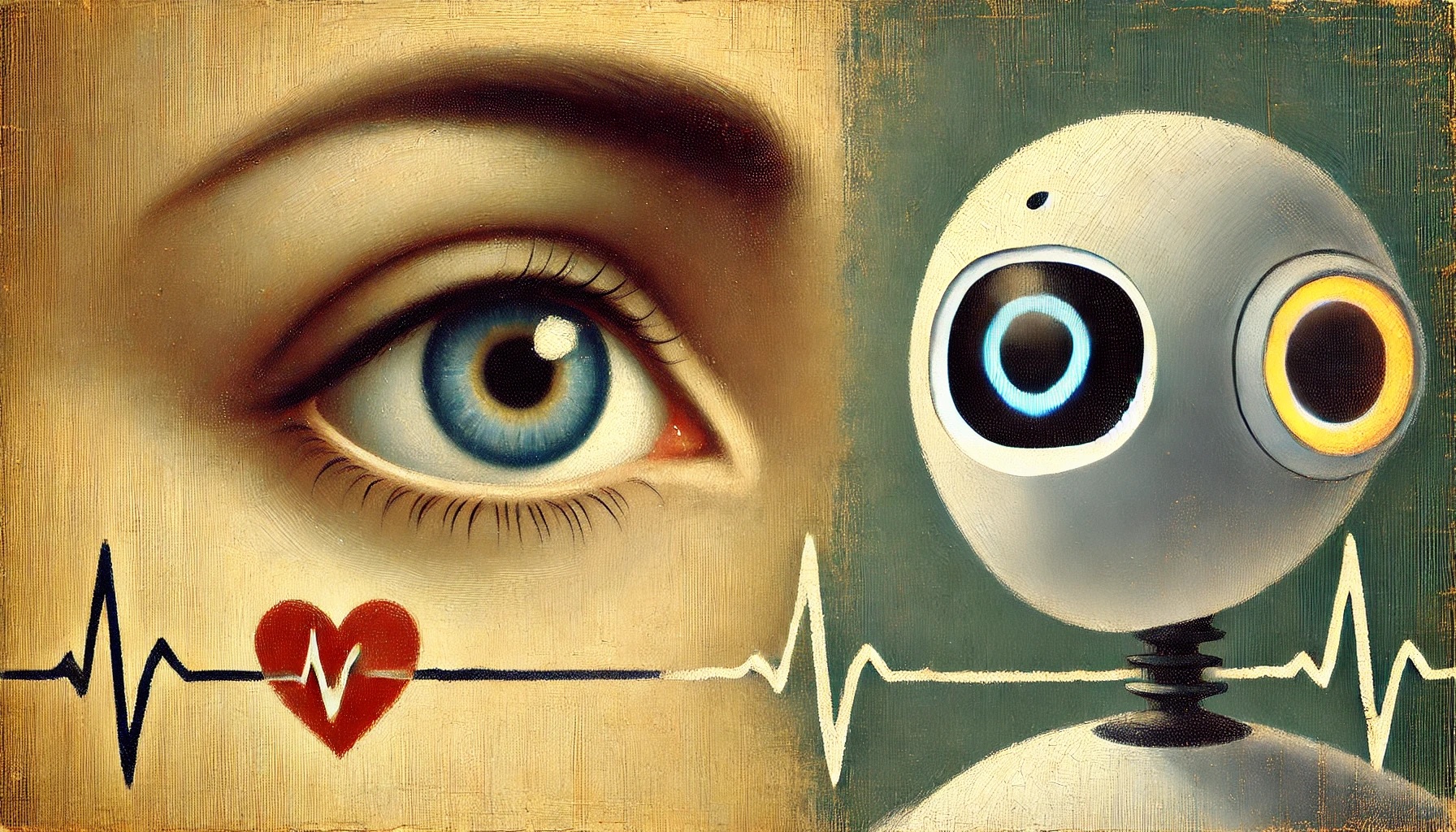

From ever-increasing costs to recurrent crises in national health systems, it seems that accessible and effective healthcare is an increasingly difficult goal to achieve. With ageing populations and the spread of chronic diseases, there is a risk that this situation will get even worse. New, often expensive treatments and resistance to change in healthcare systems further complicate matters.
In this context, artificial intelligence (AI) is often proposed as a solution. But the idea that AI can simply replace healthcare professionals is unrealistic. The complexity of the healthcare sector is proving to be a significant obstacle to implementing AI.
Despite these challenges, AI is opening up new frontiers in the prevention, diagnosis, and treatment of diseases, and it could potentially improve healthcare accessibility and efficiency.
Some of the main areas of interest in applying AI within the healthcare domain include:
- prevention and early diagnosis. Machine learning algorithms can analyse large amounts of health data to identify early signs of disease to allow for timely intervention. This proactive approach can significantly boost preventive medicine, shifting the focus from treatment to prevention.
- Care pathways optimisation. AI can support efficient management of healthcare resources, resulting in reduced waiting times and improved allocation of staff and equipment. This not only improves patient experience, it can also lead to significant cost savings for healthcare systems.
- personalised medicine. With AI, treatments can be tailored to each patient’s unique profile, thus improving their effectiveness. This “tailor-made” approach promises to overcome the “one-size-fits-all” model of traditional medicine.
- research support. AI can accelerate the discovery of new drugs and treatments by analysing vast data sets and identifying potential candidates. This reduces the time and cost associated with developing new treatments.
- promoting fairness. AI can help overcome geographical and socio-economic barriers to care accessibility, through telemedicine for instance.
What is the current state of the development and use of AI in these key areas?
When it comes to prevention and early detection, AI is proving to be particularly effective in analysing medical images, improving the accuracy and speed of the diagnosis of diseases such as cancer. Systems for analysing genetic data and biomarkers are increasingly being used. For more comprehensive prevention, the integration of data from different sources, such as electronic health records and wearable devices, is still work in progress.

Regarding care pathways optimisation, many healthcare facilities are adopting AI systems to improve their management of patient flows and allocation of resources. Predictive algorithms pertaining to length of stay and risk of hospital readmission are becoming more commonplace, contributing to more efficient resource management. This is the focus of our TrustAlert (www.trustalert.it) project, which aims to provide predictive healthcare services and manage safety protocols in healthcare facilities in the event of emergencies such as the recent pandemic.
Personalised medicine is also developing at a rapid pace, and applications are already being used in some specialist areas. Precision oncology, for example, is leading the way in using AI to select treatments based on the genetic profile of tumors. AI-based decision support systems for personalised therapies are emerging in various medical fields, promising a more targeted and effective approach to care.
There is continuous progress in the use of research support. In fact, AI is significantly accelerating the drug discovery process, from compound screening to molecule design. AI-assisted analysis of scientific literature promises to facilitate the generation of new research hypotheses, while AI-assisted clinical trial design optimisation is on the increase. These tools could potentially change the way research is conducted. In a humorous cartoon published in the New Yorker a few years ago, a bored robot at its work desk prompts two assistants to comment “The smarter we make the A.I., the less it wants to do our jobs”. The cartoon illustrated that as AI gets increasingly sophisticated, it will be capable of performing increasingly less repetitive and increasingly challenging jobs.
Promotion of fairness remains at an early stage. AI-enhanced telemedicine has seen significant growth, especially in response to the COVID-19 pandemic. There are pilot projects underway on using AI to overcome language and cultural barriers in healthcare, but large-scale implementation of systems that identify and mitigate disparities in healthcare accessibility is still in its infancy.
We must not forget that the adoption of AI in healthcare brings significant ethical and practical challenges. It is important to ensure the privacy and security of patient data, transparency and accountability in the use of algorithms, and fair distribution of the benefits of AI. There are legitimate concerns about the potential bias of algorithms that are trained on datasets in which certain population groups are over-represented. To address these challenges and achieve the full potential of AI in healthcare, we need a collaborative approach involving doctors, patients, researchers, healthcare professionals, ethicists, and decision-makers. This is the only way to develop solutions that are not only technically advanced but also ethically sound and socially beneficial. It ensures that the benefits are distributed fairly and that the human element remains central. And this facilitates the transition towards healthcare based upon the value of care.
